Before the Vote: A Short History of the Public Hearing
The history of the public hearing explains how petitions, open meetings, and formal inquiries shaped a civic forum—and what its record can preserve.
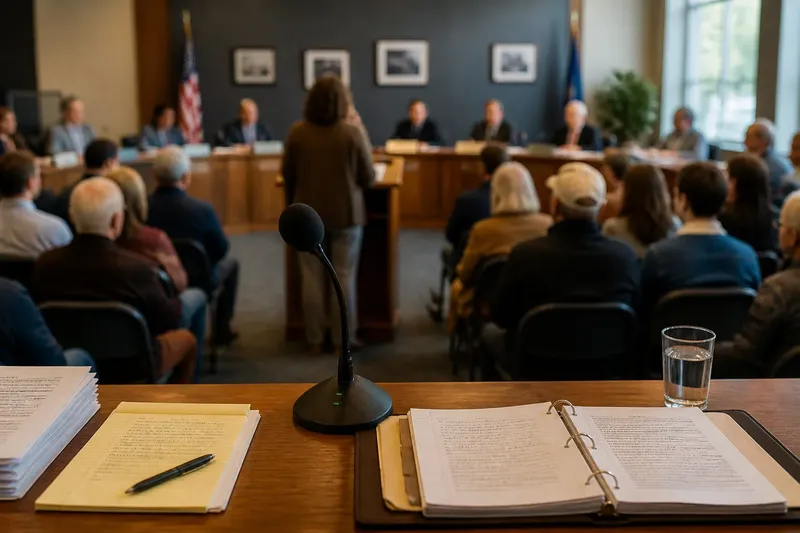
Why does a town council pause before a vote to hear residents speak? The history of the public hearing is less a story of one invention than a meeting of familiar practices: submitting a grievance, speaking before a gathered audience, and examining a question through a formal process. Their exact origins vary across places and periods, so the modern hearing is better understood as a civic form with several historical relatives than as the direct descendant of one event.
Those relatives left different marks. A petition puts a request before an authority. An assembly makes public response visible. An inquiry organizes information around a question. Modern hearings may borrow from all three, but the resemblance does not mean every local hearing follows the same historical path. The distinction helps explain what the format can preserve—and what it cannot decide on its own.
Petitions gave grievances a route to officials
In many political settings, people have used written requests or representatives to bring complaints to rulers, councils, and other authorities. The details differed by institution and era, but the basic form was recognizable: state a grievance, ask for a response, and direct the request to an office with power to act.
A petition need not involve a live exchange. An authority might receive a document without its author present, then choose how to handle it. That form nevertheless made a claim legible as a request to public power, rather than leaving it solely to private access or informal conversation.
Speaking alongside a written appeal adds another kind of information. A person can explain circumstances in their own words, while a document gives officials something they can revisit after the moment has passed. The two forms are complementary, not interchangeable: a statement can convey context, and a written record can preserve the request.
Petitioning is especially suited to a focused grievance or request for recognition. It is less suited to sorting through a complicated set of competing proposals unless the process also provides a way to compare them. Receiving a request does not settle it.
Public gatherings made disagreement visible
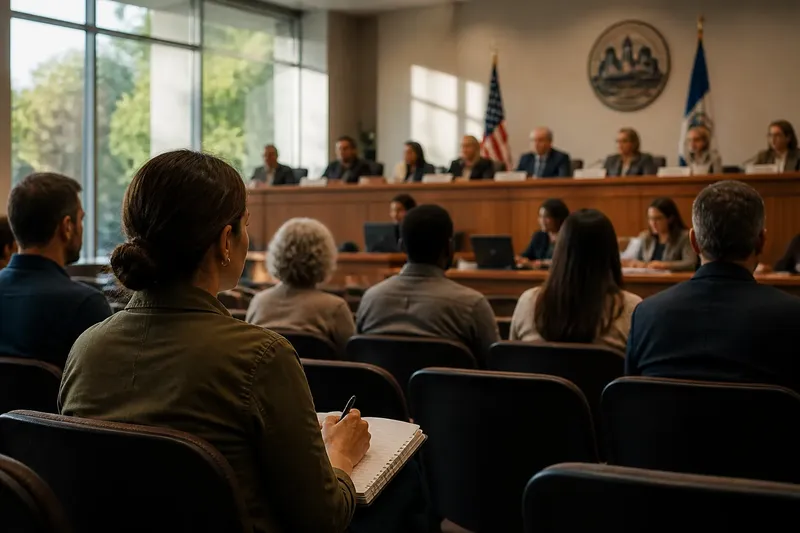
Public assemblies and meetings have taken many forms, with different rules about who could attend, speak, or influence a decision. One recurring feature is the shared setting: officials and members of an audience encounter an issue in front of one another. A concern becomes more than a private exchange when others can hear the response.
That visibility has limits. Attendance does not mean equal influence, and an open gathering does not automatically produce a clear account of what was said. Local custom, meeting rules, and social conditions shape who can participate. The assembly’s distinctive contribution is that people can witness a public discussion and its boundaries.
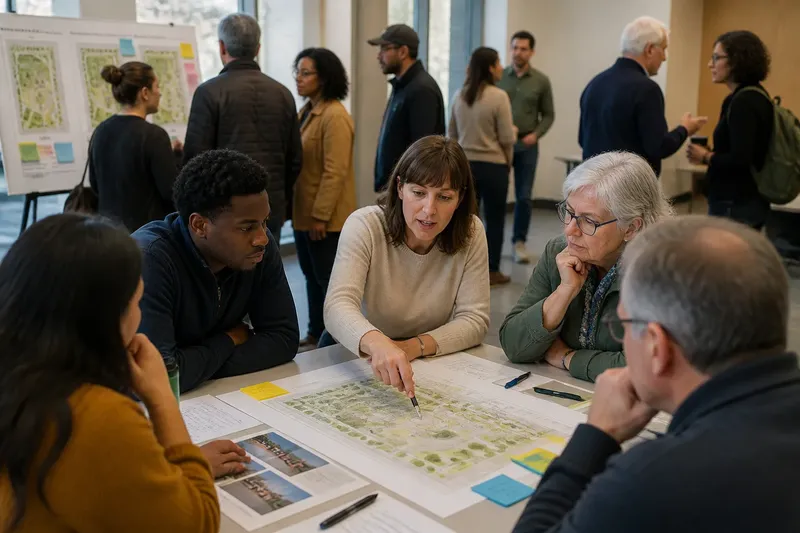
This strand is useful when the public character of an issue matters: residents may want to hear competing views about a shared place or make a concern visible to officials and neighbors. A gathering can reveal what people care about. It is not, by itself, a method for determining which technical claim is accurate.
Formal inquiries organized claims around a question
Formal inquiries provide another point of comparison. In different institutional settings, authorities have used structured proceedings to examine a complaint, proposal, or disputed matter. The procedures vary, but they can include a defined question, a record of submissions, and an opportunity to consider opposing accounts.
That structure can make a disagreement easier to follow. Instead of collecting only general reactions, an inquiry can focus attention on what is being proposed, what objections have been raised, and what information bears on those objections. Its value depends on how the process is designed and what the decision actually requires.
Structure also draws boundaries. A hearing’s rules shape who can speak, which materials are accepted, and how the discussion is organized. A concern may be serious yet fall outside the question officials have set. A careful record can clarify the proceeding without capturing every reason people care about the issue.
Formal inquiry is a useful model when a decision calls for organized consideration of claims and evidence. It is not a replacement for public discussion about values. Information may clarify likely consequences, but people and their representatives still have to decide how those consequences should matter.
How did these practices shape public hearings?
Did the public hearing begin at one identifiable moment?
There is no single origin that explains every modern public hearing. Different institutions developed their own ways to receive requests, gather people, and examine disputed matters; present-day procedures may resemble more than one of those practices.
Why do hearings use both spoken statements and written records?
Spoken remarks let participants address an issue directly, while written submissions can be revisited as officials consider it. The combination serves practical purposes without proving that every hearing descends from one particular historical custom.
Does a public hearing give the audience the final say?
Not necessarily. A hearing provides a setting for public input, but the authority responsible for the decision may remain elsewhere under the applicable rules.
Why can a hearing be open and still feel narrow?
People may be able to attend or speak while an agenda, time limit, or defined question restricts the discussion. Public access describes who can take part; it does not mean every issue or argument will fit the proceeding.
Match the civic form to the unresolved task
The historical comparison is not a ladder in which one practice simply replaced another. A current process may accept written submissions, invite public comment, and keep a formal record at once. The useful question is what kind of attention the unresolved issue needs.
- Focused grievance: Check whether the concern can be stated as a specific request to an identified office. If it can, use the office’s written-submission route; if it cannot, ask which authority handles the broader issue before sending a petition.
- Public acknowledgment: Check whether people need to hear one another’s concerns in a shared setting. If visibility and exchange are central, seek an open meeting; if they are not, a written comment may be the more direct route.
- Competing claims: Check whether officials must compare opposing accounts about a defined proposal. If they do, look for a hearing or inquiry with a clear record; if the disagreement is mainly about community priorities, request a forum designed for discussion.
- Evidence beyond the meeting: Check whether a claim depends on documents or technical material. If it does, ask how written evidence may be submitted; if the process accepts only brief remarks, identify that limit and ask where fuller material belongs.
- Unclear scope: Check the agenda for the question officials will consider. If the concern fits, connect comments to that question; if it does not, ask whether another meeting or decision process covers it.
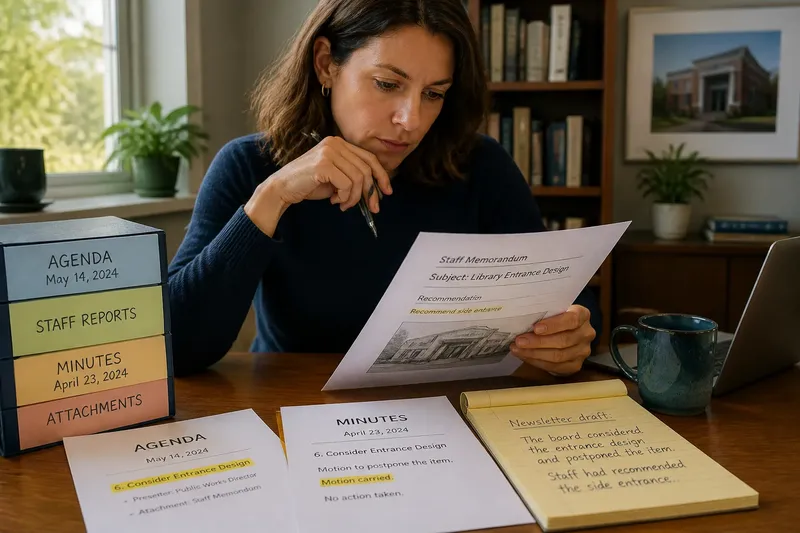
- Need for a lasting account: Check whether the institution keeps minutes, recordings, or written submissions. If it does, use the stated submission method; if it does not, ask how comments become part of the official record before relying on the hearing to preserve them.
Say a town is considering a shared service space in a public building, and nearby residents are concerned about noise and access. In this invented situation, the starting inputs are a draft proposal, a written concern about evening activity, and a separate question about which uses would keep the entrance accessible. The resident first checks the meeting agenda: it asks for comments on the proposed uses, so the access question fits, while the broader concern about neighborhood priorities may need a public discussion. The resident then submits the noise concern in writing and gives a short spoken comment connecting access to the draft. The observable result is a written concern officials can revisit and a public statement tied to the agenda; the tradeoff is that neither act decides which use the town should choose.
The history explains what a hearing can preserve
Public hearings bring together an aspiration and a procedure: people can speak before an authority acts, and the process can create a record of what was raised. Those features matter, but being heard is not the same as controlling the decision. A comment can be visible, relevant, and preserved without being adopted.
The different historical strands also explain why one format may not meet every expectation. A person seeking recognition may find a tightly focused inquiry too narrow. Someone asking officials to compare claims may find an open gathering too diffuse. A written appeal can put a grievance before an office, but may not create the exchange its author hoped for.
When you look up the history of the public hearing, keep the comparison modest: petitions, assemblies, and inquiries offer useful ways to understand its functions, not a single universal origin story. For a particular decision, check the agenda, submission rules, and record policy. Those details show what this hearing can receive and preserve before the vote.