The Consultation Is Not the Decision
Learn how to read a public consultation, understand what officials are asking, and tell which parts of a proposal remain open to public input.

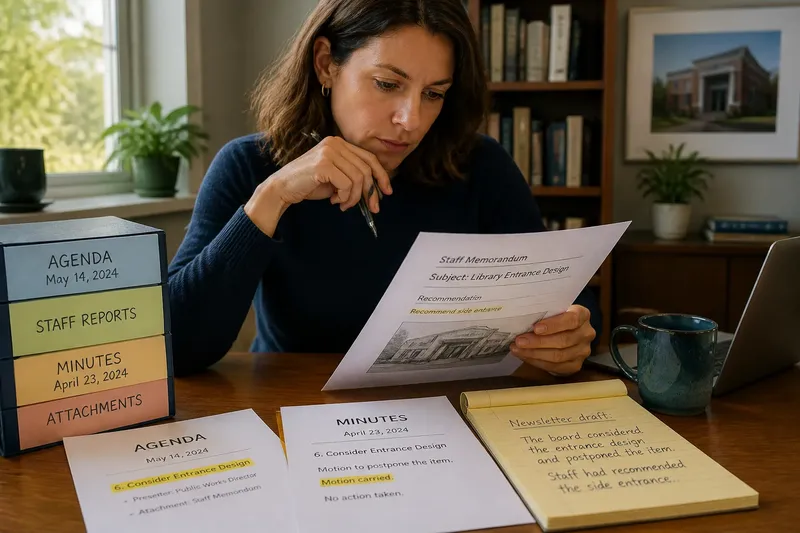
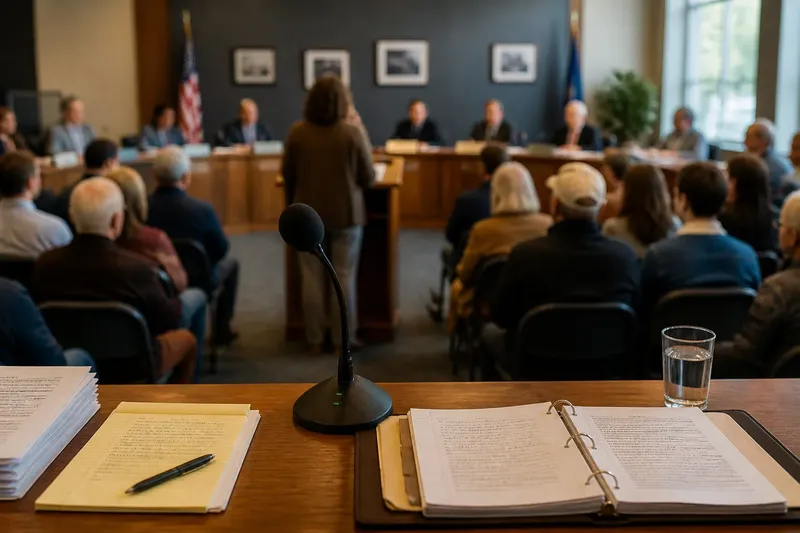
Has a city chosen a plan, or is it asking residents to help shape one? A public consultation is not the decision. Its notice tells you what officials are asking about and how they invite people to respond; the wording can also reveal which parts of a proposal are still open.
Read a consultation as an invitation with boundaries, not as a promise about the outcome. That distinction helps you decide what to comment on and what to ask before the deadline.
A consultation notice defines the question officials are asking
Start with the subject and scope. A notice might invite comments on a draft policy, ask residents to compare design options, or seek priorities for a service. Those are different requests. The form or meeting agenda should make clear whether officials want feedback on the whole proposal or only on a particular detail.
Pay attention to what the notice says is already settled. A public body may have approved a broad plan while asking people to comment on how it will be carried out. Another consultation may leave the main approach open and ask residents to compare alternatives. Neither setup tells you what the final choice will be, but each defines what your response can address.
Say a parks department posts three possible playground layouts and asks families to comment on accessibility and equipment. The starting point is a notice that presents all three as options, with no selected layout named. A resident can respond by comparing those features; the expected observable result is a submitted comment that speaks to the question officials actually posed, rather than assuming the department has already chosen.
The invitation and the decision-maker may be different
Staff, a consultant, or a community partner may collect responses, while a council, board, commission, or another authorized body makes the eventual choice. The organization hosting a survey explains who is running that part of the process; it does not necessarily identify who has authority to act.
Look for the stated next step. The notice may say that staff will summarize themes, prepare options, or present a recommendation to a public body. If it does not explain who will review comments, ask the issuing office to clarify. A consultation is not automatically a vote, and a popular response is not necessarily binding.
The same care applies to phrases about how input will be used. “Consider” and “inform” indicate that comments are meant to enter the process, but do not specify how much weight they receive. If the public body describes a formal voting procedure, read its rules rather than inferring one from a poll or survey format.
What should you check before submitting a comment?
What part of the proposal is still open?
Look for language that separates settled decisions from unresolved choices. If the notice is vague, ask the public body which parts can still change so your comment addresses an open question.
Who will review the responses?
Check whether the notice names staff, a committee, a board, or another decision-maker. If it names only the consultation host, ask who will consider the input and what role that host has.
How will the public body use the input?
Look for a promised summary, recommendation, response, or further opportunity to comment. If the notice says only that feedback will be collected, ask what participants can expect after the process closes.
Is the exercise a poll or a formal vote?
A checkbox or show of hands does not by itself establish a binding vote. Check the notice and applicable process rules; if they do not state the exercise’s effect, ask the organizer directly.
A focused comment is easier to act on
Use the consultation’s own questions as a frame, then explain the reason behind your view. A comment that names a specific concern or tradeoff gives officials something more useful to consider than a bare preference.
Imagine a town asks residents to choose between two proposed bus-stop locations, and its notice says both remain under review. A participant prefers the stop near the library because the alternative sits across a busy driveway. They submit that comparison through the town’s form and ask whether safe pedestrian access will be considered. The observable result is a comment tied to a stated option and a specific issue; the participant has not mistaken the survey for a final vote.
If the consultation asks about a narrow detail, keep your comment connected to that detail, while noting any broader concern that affects it. If the form cannot capture your point, check whether the public body accepts written comments by email or at a meeting.
Ask for clarification when the scope is unclear
A short, precise question can resolve uncertainty before you respond: “Which parts of this proposal remain open to change, and who will review the comments?” If the answer is not available, you can still submit a comment that states what you understood the question to be and asks officials to clarify the process.
Understanding a public consultation starts with its stated scope, its intended audience, and its promised use of input. For a public consultation, those details help you choose a relevant response and recognize when the notice leaves an important question unanswered.